Encounters
Those who made it
For my 1984 book Ils ont réussi, thirteen leading figures told me how they had made their way. And long before that, in Hollywood as in Paris, television had put me face to face with the stars of the day.
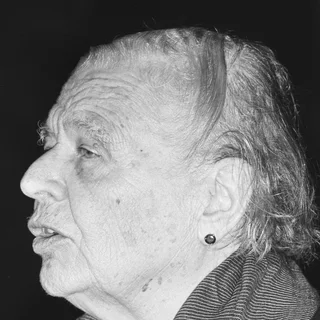
Marguerite Yourcenar
Novelist, the first woman elected to the Académie française
Interview for my book "Ils ont réussi", France-Empire, 1984
In 1984 Marguerite Yourcenar had been, for four years, the first woman ever elected to the Académie française. The author of "Mémoires d'Hadrien" and "L'Œuvre au noir" had built her work far from Paris, never yielding an inch to fashion. She is one of the thirteen figures who told me their story for my book on success: hers showed that one can reach the summit and remain entirely free.
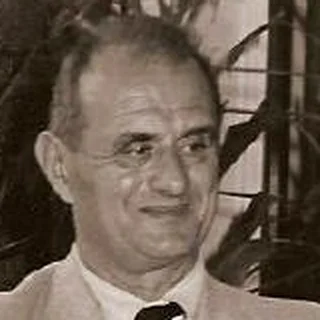
Paul Bocuse
Chef, holder of three Michelin stars since 1965
Interview for my book "Ils ont réussi", France-Empire, 1984
By 1984 Paul Bocuse was already a monument: three stars for nearly twenty years at his inn in Collonges-au-Mont-d'Or, near Lyon, and a reputation that had travelled the globe. He had brought chefs out of their kitchens and turned French gastronomy into an embassy. He fully belonged among the thirteen figures of my book on success: a craftsman who had become the face of a country.
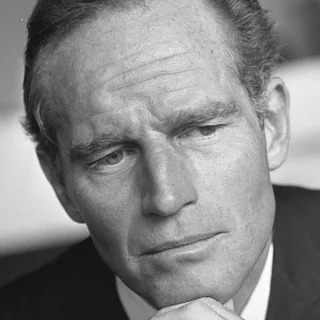
Charlton Heston
American actor, Academy Award for Best Actor for "Ben-Hur"
Hollywood, August 1976, for TF1's eight o'clock news
In the summer of 1976 I shot a series of reports in Hollywood for TF1's eight o'clock news. The fourth, broadcast on 16 August, was devoted to Charlton Heston, who talked to me about his new film, "Midway". Moses, Ben-Hur, El Cid: there in front of me, in the flesh, sat half the heroes of the big screen. The INA has kept the interview.
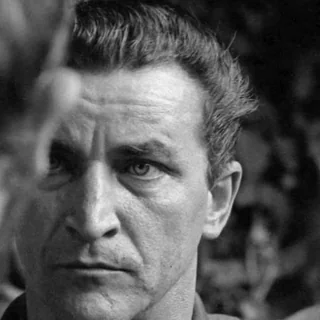
Maurice Béjart
Dancer and choreographer, founder of the Ballet du XXe siècle
Interview for my book "Ils ont réussi", France-Empire, 1984
In 1984 Maurice Béjart was directing the Ballet du XXe siècle in Brussels, the company he had founded in 1960. With "Le Sacre du printemps" and then his "Boléro", he had taken dance out of gilded theatres and filled sports arenas with it. That destiny, popular and demanding at once, is what I set out to understand when I interviewed him for my book.
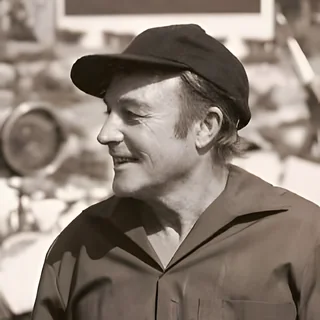
Gene Kelly
American dancer, actor and director, the man of "Singin' in the Rain"
Hollywood, August 1976, for TF1's eight o'clock news
I met him on a Hollywood set where a film starring the stuntman Evel Knievel was being shot. The report, with interviews of both Gene Kelly and Knievel, ran on TF1's eight o'clock news on 14 August 1976, as part of my summer series on Hollywood. The man of "Singin' in the Rain" and "An American in Paris": for a Frenchman, he was Hollywood in person.
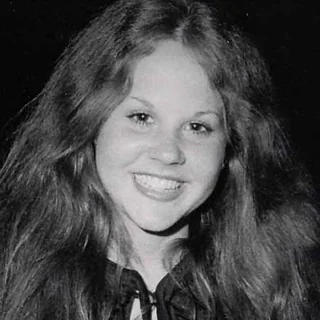
Linda Blair
American actress, who shot to fame in "The Exorcist"
Hollywood, August 1976, for TF1's eight o'clock news
Three years after "The Exorcist", which had terrified the whole world, Linda Blair was shooting the sequel. I interviewed her for my summer series on Hollywood, while she was out jogging. The INA keeps the report under the title "Rencontre avec Linda Blair".
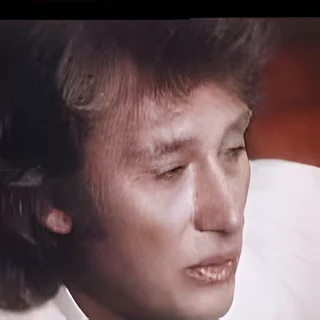
Johnny Hallyday
Singer, the idol of French rock
Paris, September 1976, for TF1's eight o'clock news
In September 1976 Johnny Hallyday was rehearsing his new show at the Palais des Sports in Paris. I went to watch him at work and interviewed him for TF1's eight o'clock news, which ran the piece on 25 September. I was then head of arts and culture at the channel: from the Cannes festival to Hollywood, it was a year of show business.
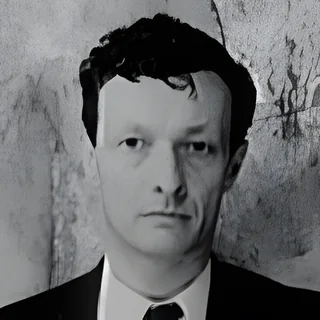
Jean-Louis Barrault
Actor and director, founder of the Renaud-Barrault company
Interview for my book "Ils ont réussi", France-Empire, 1984
Baptiste in "Les Enfants du paradis": that was him. In 1984 Jean-Louis Barrault, with Madeleine Renaud, was running the Théâtre du Rond-Point in Paris, after a lifetime on the boards, from the Comédie-Française to the Odéon. He was among the thirteen in my book because he embodied a particular kind of success: that of a man who gave his entire life to the theatre.
Bernard Buffet
Painter, famous from the age of twenty
Interview for my book "Ils ont réussi", France-Empire, 1984
Famous at twenty, rich before thirty, Bernard Buffet had known everything painting can bring: glory, money, and then the disdain of critics who never forgave him his success. In 1984 the public remained loyal and Japan had given him a museum of his own. It was that destiny, adored and disputed, that I wanted to examine in my book on success.
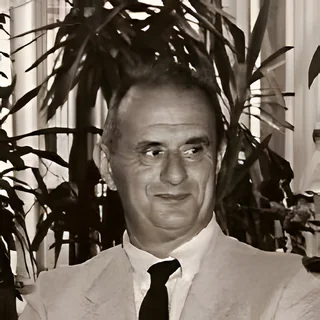
Guy des Cars
Popular novelist with tens of millions of readers
Interview for my book "Ils ont réussi", France-Empire, 1984
From "L'Impure" and "La Brute" onwards, Guy des Cars sold his novels by the million, in station kiosks as well as bookshops, while the critics looked down their noses. In 1984 he was one of the most widely read writers in France. His success, the most popular of all, had its place in my book: that of a storyteller who only ever wrote for his readers.
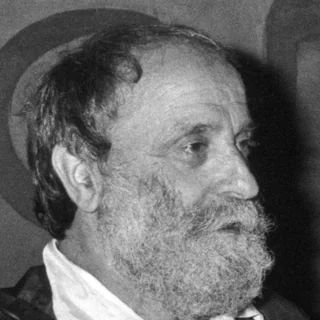
César
Sculptor, a leading figure of Nouveau Réalisme
Interview for my book "Ils ont réussi", France-Empire, 1984
His compressed cars caused a scandal; his expansions and his giant Thumb toured the museums. In 1984 César Baldaccini, the boy from the Belle de Mai district of Marseille, was one of France's most famous sculptors, and since 1976 the trophy of the French film awards had borne his name. I interviewed him for my book on success: his had started from a very long way down.
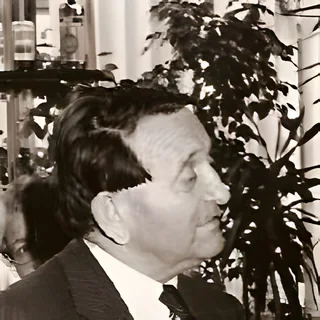
Édouard Leclerc
Founder of the E.Leclerc retail chain
Interview for my book "Ils ont réussi", France-Empire, 1984
In 1949, in Landerneau, a young Breton grocer started selling at wholesale prices. Thirty-five years later Édouard Leclerc headed one of the country's leading retail networks and was still crossing swords with every monopoly going, from petrol to books. Among the thirteen in my book he was the entrepreneur who started with nothing, the man who changed the way the French do their shopping.
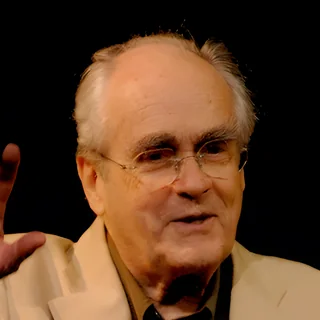
Michel Legrand
Composer, three-time Academy Award winner
Interview for my book "Ils ont réussi", France-Empire, 1984
The year my book came out, Michel Legrand collected his third Oscar in Hollywood, for the music of "Yentl". The first two had rewarded "The Thomas Crown Affair" and "Summer of '42"; before them, "Les Parapluies de Cherbourg" and "Les Demoiselles de Rochefort" had set the whole of France singing. A French musician fêted in Hollywood: he fully deserved his place among the thirteen of "Ils ont réussi".
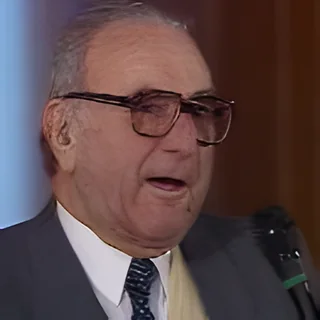
Paul Ricard
Industrialist, creator of Ricard pastis
Interview for my book "Ils ont réussi", France-Empire, 1984
In Marseille in 1932 Paul Ricard created the pastis that bears his name, then in a few decades built one of France's great spirits groups. He also developed the islands of Bendor and Les Embiez and built, at Le Castellet, the motor-racing circuit named after him. In 1984, retired from business, he remained the model of the builder-boss, and it is as such that he appears in my book.
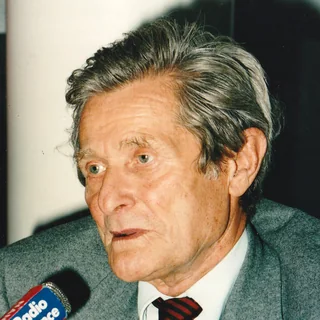
Léon Schwartzenberg
Cancer specialist, professor of medicine
Interview for my book "Ils ont réussi", France-Empire, 1984
In 1984 Professor Léon Schwartzenberg was one of the best-known cancer specialists in the country. With "Changer la mort", written with the journalist Pierre Viansson-Ponté, he had broken a taboo: telling patients the truth, talking about the end of life. His success was neither one of money nor of glory, and that is exactly why it belonged in this book.
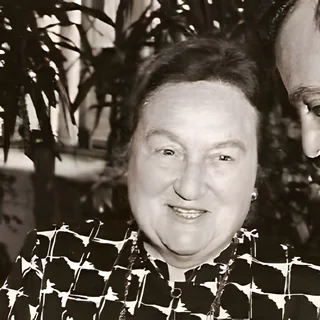
Madame Soleil
Germaine Soleil, astrologer, a voice of Europe 1 radio
Interview for my book "Ils ont réussi", France-Empire, 1984
Every day on Europe 1, listeners in their thousands brought her their questions. Madame Soleil was so famous that President Pompidou himself once remarked at a press conference that he was not Madame Soleil. Whether or not one believes in the stars, her success was a social phenomenon, and that is why she is among the thirteen in my book.
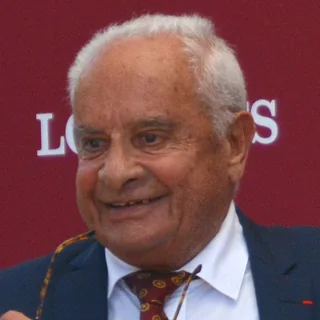
Yves Saint-Martin
Jockey, many times French champion
Interview for my book "Ils ont réussi", France-Empire, 1984
To racegoers he was simply "the" jockey. In 1984 Yves Saint-Martin had dominated French racecourses for more than twenty years: champion jockey many times over, several times winner of the Prix de l'Arc de Triomphe. In my book he stands for sporting success, the kind that is decided at forty miles an hour on half a tonne of muscle.