Timeline
A life, date by date
Every milestone along the way, from my beginnings at Agence France-Presse to my latest book.
All dates
Every date, year by year
Origines
Origins
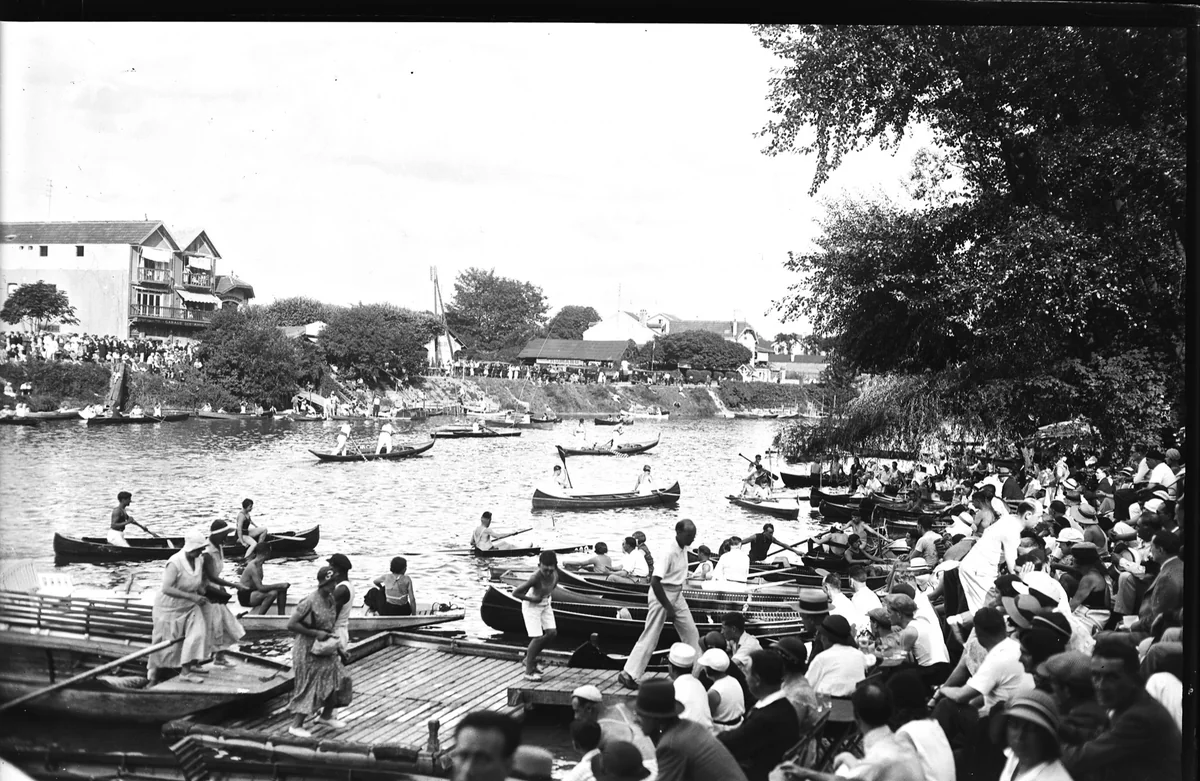
I was born in Nogent-sur-Marne, just east of Paris, to Italian parents from the shores of Lake Maggiore who had fled fascism in the 1930s. At home my mother banned Italian: we were to be French through and through. A fortune-teller in Nogent once predicted that I would travel the world, meet presidents, kings and popes, and write books.
Chapter 1 : The boy from NogentAnnées 1950
From a factory in Bobigny to the teleprinters of Stockholm
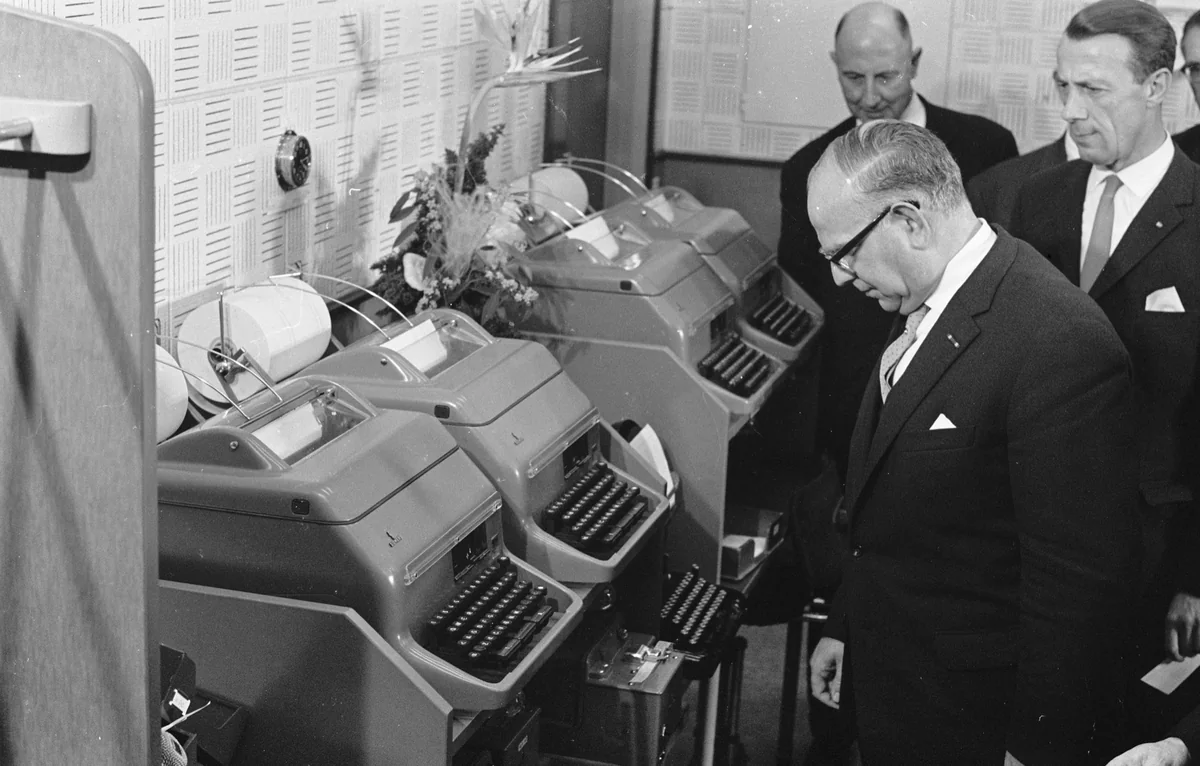
With nothing but my primary school certificate, I went from one small job to the next: a bank, a cloth merchant in the rue du Grenier-Saint-Lazare, then night shifts in a plastics factory in Bobigny. I left to join one of my sisters in Stockholm. There, in the office of the AFP correspondent, I stood transfixed in front of the teleprinters: I would be a journalist, and it would be at AFP.
Chapter 1 : The boy from Nogent1959-1961
Algeria, in uniform
In 1959 I sailed for Oran aboard the Pasteur. Because I could type, I was posted to the 5th Bureau, under a lieutenant named Michel Duchaussoy, a future member of the Comédie-Française. During the generals' putsch of April 1961, transistor radio pressed to my ear, I stayed loyal to General de Gaulle.
Chapter 1 : The boy from Nogent30 sept. 1961
Joining Agence France-Presse
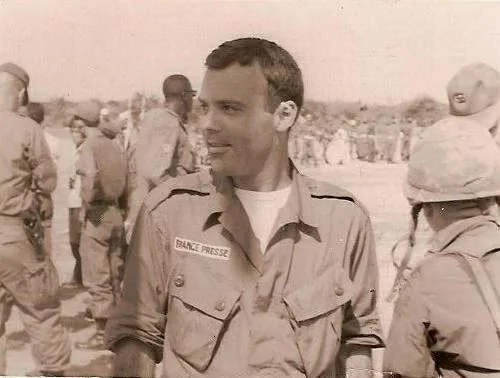
A letter from AFP, place de la Bourse: I was taken on as an editorial assistant, for one month. The agency's chairman, Jean Marin, once the voice of Free France in London, gave me three months to prove myself. A trainee in December, on the staff by February 1962, I was drilled down to the last comma by Claude Imbert, Jacques Boetsch and Jean-Jacques Faust.
Chapter 2 : A wire reporter in newly independent AfricaAutomne 1962
To Dakar by sea: my first interview
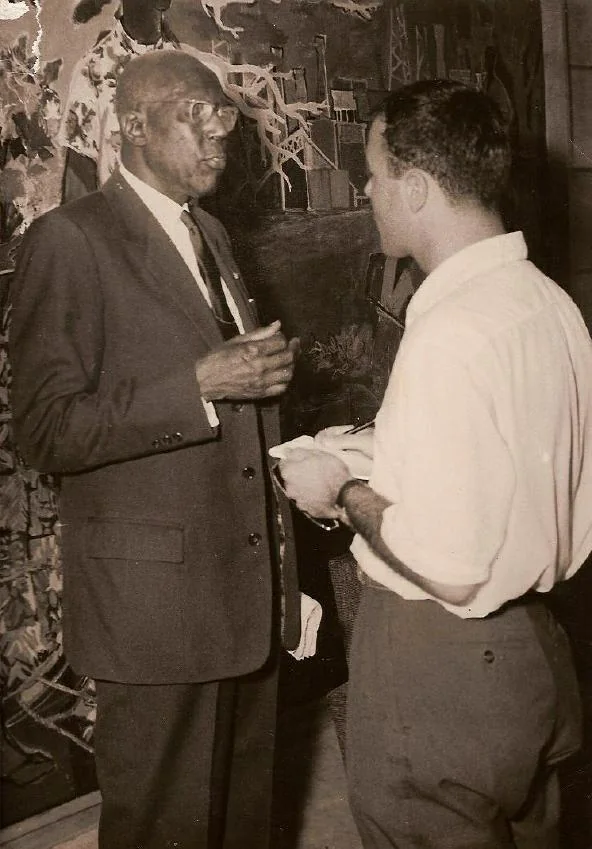
The transfer letter was dated 27 August 1962: AFP was sending me to Dakar. I was afraid of flying, so I sailed from Bordeaux on the Ancerville, with an army trunk and a second-hand Peugeot 203. In Senegal I conducted the very first interview of my career, with Lamine Guèye, president of the National Assembly.
Chapter 2 : A wire reporter in newly independent Africa1962-1965
Correspondent in newly independent Africa
From Senegal to Mali, from Guinea to the Ivory Coast, from Togo to the two Congos, I covered a dozen newborn countries for AFP. Among those I interviewed was President Léopold Sédar Senghor.
Chapter 2 : A wire reporter in newly independent AfricaAnnées 1960
Face to face with history
In the course of my AFP assignments I interviewed Che Guevara, Ahmed Ben Bella, Richard Nixon and Zhou Enlai. The dust jacket of my first book, in 1969, keeps the record.
1965
Saigon: war correspondent
AFP sent me to Vietnam. When I arrived in Saigon the Americans had only "advisers" there; by the time I left, they had more than half a million men. Nearly three years of war, day after day, for the agency and also as correspondent for Europe 1 radio and for the ORTF, French state television.
Chapter 3 : War correspondent, from Saigon to BiafraHiver 1966-1967
An evening in Saigon, as told in Paris Match
The journalist Michèle Ray, captured by the Viet Cong in January 1967, wrote letters from Vietnam which Paris Match published. In them she mentions an evening given in her honour in Saigon, at my home, the home of the AFP man.
Chapter 3 : War correspondent, from Saigon to BiafraMai 1968
May 1968 and one full stop too many
Back from Vietnam, I was on AFP's foreign desk while the barricades went up across Paris. I wrote the headline for a dispatch on Georges Pompidou's trip to Afghanistan; the machine doubled the full stop, and those unintended suspension points earned me a furious telephone call from the prime minister's office. Acquitted for lack of proof, I began to think about leaving the agency.
Chapter 3 : War correspondent, from Saigon to BiafraÉté 1968
The Biafran front
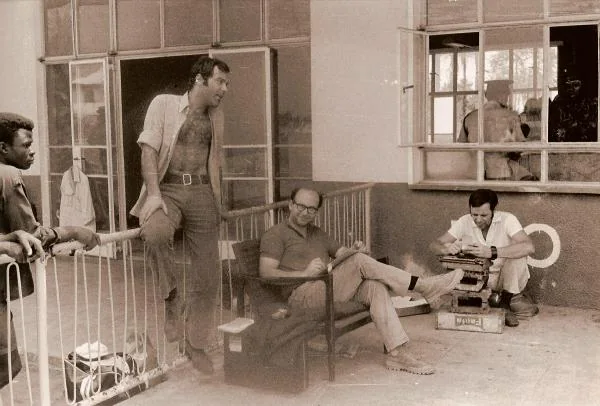
In July AFP sent me to Nigeria, where the Biafran war had been raging for a year. I spent two months with the federal troops, between Lagos, Port Harcourt and the front. My dispatches ran in Le Monde, The Times, the Jornal do Brasil and as far away as Canada.
Chapter 3 : War correspondent, from Saigon to Biafra29 juil. 1968
Nsokpo: three days at the front
Three days north of Port Harcourt, among the first journalists to reach the area: villages wiped off the map, a river forded waist-deep, five miles on foot to the front line. My dispatch, datelined Nsokpo, appeared in Le Monde the next day.
Chapter 3 : War correspondent, from Saigon to Biafra30 juil. 1968
Inside the headquarters of the "Black Scorpion"
In Port Harcourt I interviewed Colonel Benjamin Adekunle, commander of the 3rd Marine Commando Division. Le Monde ran the interview on 31 July; the following day the US State Department summarised it in a cable to its embassies in Lagos and Paris.
Chapter 3 : War correspondent, from Saigon to Biafra4 sept. 1968
Entering Aba
Aba had just fallen to the federal army. I was among the first reporters to enter the town: thousands of overturned cars, mortars at the crossroads, columns of refugees. My dispatch was printed as far away as Canada, in the Victoria Daily Times.
Chapter 3 : War correspondent, from Saigon to Biafra1969
La Guerre des rapaces, my first book
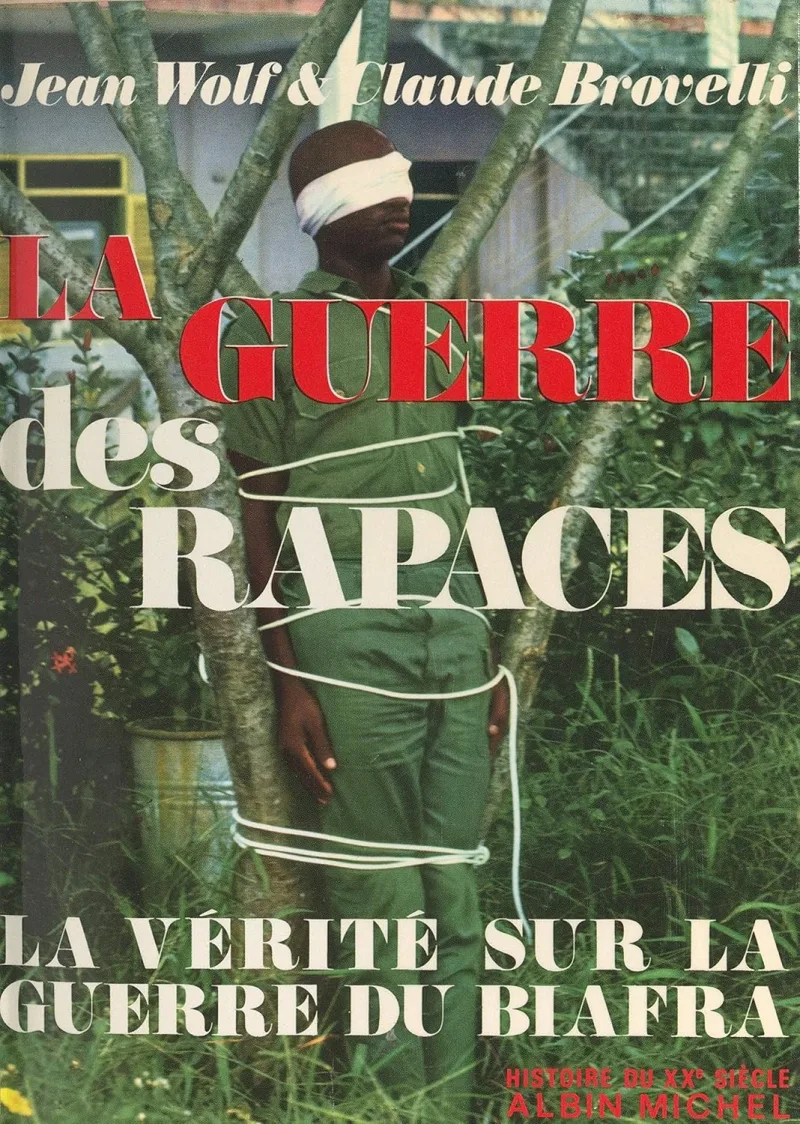
My two months at the front became a book, written with Jean Wolf and published by Albin Michel: La Guerre des rapaces, the truth about the Biafran war. Le Monde reviewed it on 10 May 1969, and the British journal International Affairs the following year. Around the same time, Jeune Afrique ran my report on South Vietnam alongside Marc Riboud's photographs from Hanoi.
Chapter 3 : War correspondent, from Saigon to BiafraAutomne 1969
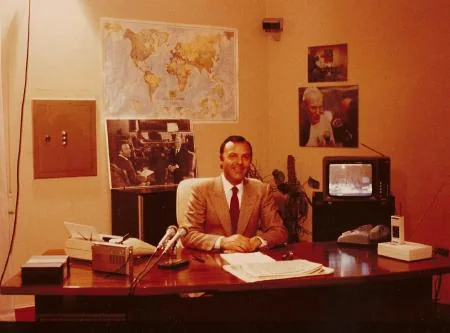
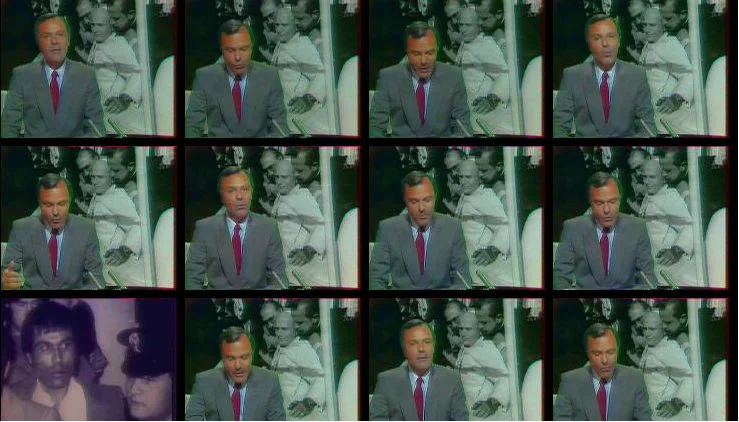
Joining the ORTF: "24 heures sur la Deux"
I had left AFP for France Inter radio, where I commented on international news: the INA holds my piece of 8 May 1969 on the Paris peace talks on Vietnam. Jacqueline Baudrier, who ran the station's newsroom, took me with her into television: that autumn, "24 heures sur la Deux" went on air on the ORTF's second channel, then the only one in colour. I was one of its anchors and special correspondents.
Chapter 4 : Every evening, in France's living roomsHiver 1969-1970
My Lai, then Biafra: my first reports on screen
The earliest reports of mine held by the INA, from November 1969, deal with the My Lai massacre, which the American press had just revealed. On 22 January 1970, with the Biafran war barely over, Christian Bousquet and I made a report of more than six minutes from the region retaken by the federal army: a refugee camp, a hospital.
Chapter 4 : Every evening, in France's living rooms13 avr. 1970
Olof Palme and Mikis Theodorakis, the same evening
The same bulletin carried my interview with the Swedish prime minister Olof Palme, on his country's neutrality and social model, and my report on the arrival in Paris of the Greek composer Mikis Theodorakis, just freed by the colonels' regime.
Chapter 4 : Every evening, in France's living rooms2 juin 1970
Face to face with Nicolae Ceausescu
Ahead of his official visit to France, the Romanian head of state received Claude Manuel and me for a filmed interview, broadcast by both ORTF channels on 15 June. The Romanian daily Scînteia reported on it.
Chapter 4 : Every evening, in France's living rooms26 janv. 1971
Back in Senegal: Senghor
Nearly ten years after my beginnings in Dakar, I returned for television: interviews with President Léopold Sédar Senghor, with his prime minister Abdou Diouf, and with the writer Birago Diop on French culture in Senegal.
Chapter 4 : Every evening, in France's living roomsOct. 1971
"Le fascisme italien", a two-part investigation
After the electoral breakthrough of the neo-fascist MSI, I went to investigate in Italy, mainly in Sicily, and met the party's leader, Giorgio Almirante. Forty minutes in two parts for "24 heures sur la Deux", forty years after my parents had fled fascism.
Chapter 4 : Every evening, in France's living rooms11 sept. 1972
"24 heures sur la Une": the first channel
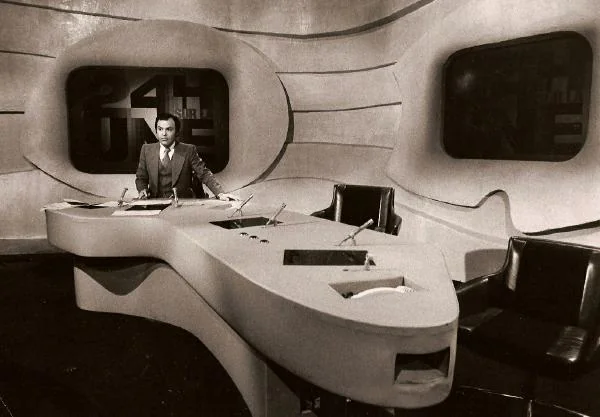
Jacqueline Baudrier's newsroom moved to the ORTF's first channel and the news became "24 heures sur la Une". As deputy editor-in-chief I was first in charge of the lunchtime edition, before anchoring the evening one more and more often, in a rotating team that included Léon Zitrone, Jean-Pierre Berthet and Bernard Volker. The INA holds more than a hundred and thirty editions I anchored up to January 1975.
Chapter 4 : Every evening, in France's living rooms24 nov. 1972
Georges Pompidou in Lomé: an eight-minute interview
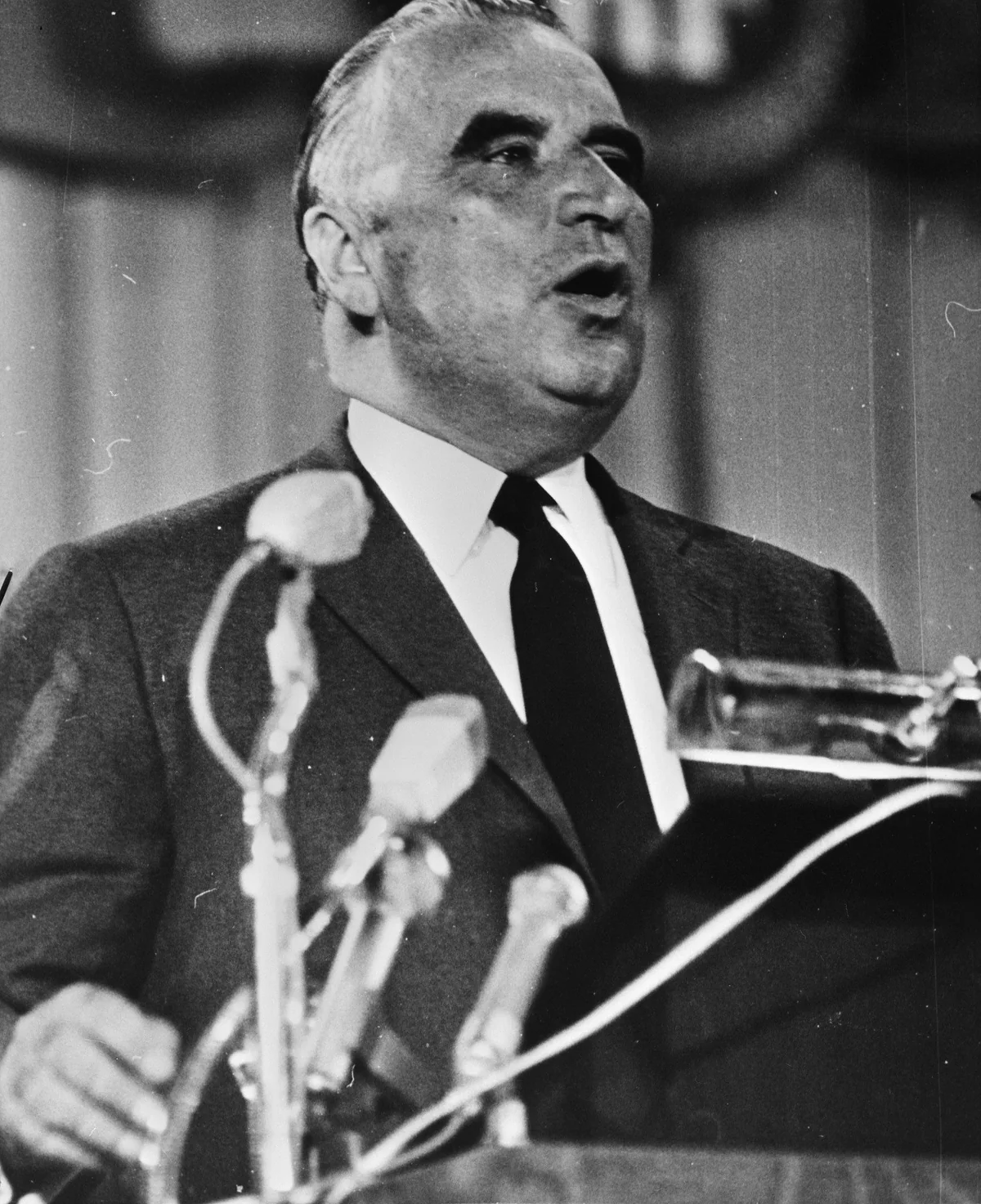
As special correspondent on the president's third African tour, I followed him to Upper Volta and then Togo. In Lomé, Georges Pompidou gave me an eight-minute interview, broadcast on the evening news.
Chapter 4 : Every evening, in France's living rooms1973
Mururoa, Allende, Antonioni
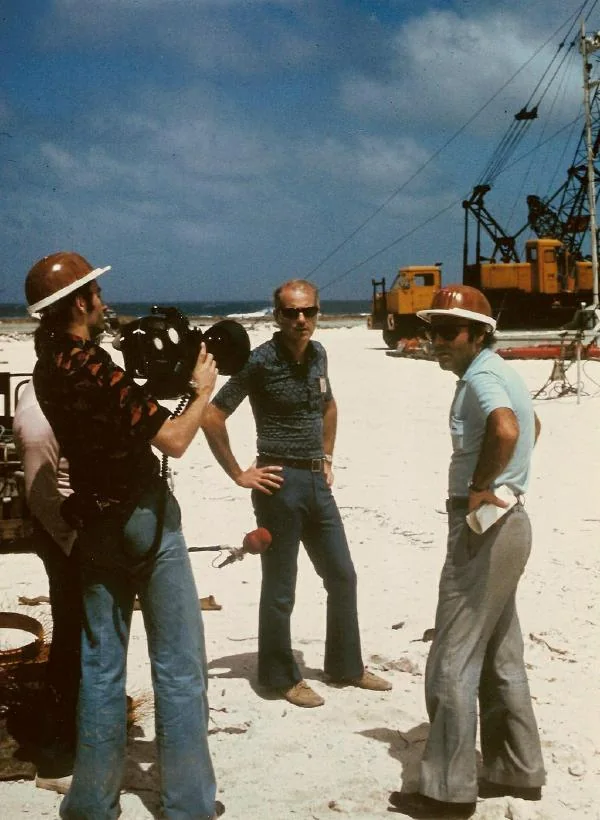
I went to Polynesia to film documentaries on the French nuclear tests at Mururoa and Fangataufa. The same year I voiced the French commentary of two exceptional documents: Roberto Rossellini's interview with Salvador Allende and "Chung Kuo, Cina", Michelangelo Antonioni's film on China.
Chapter 4 : Every evening, in France's living roomsAvril 1974
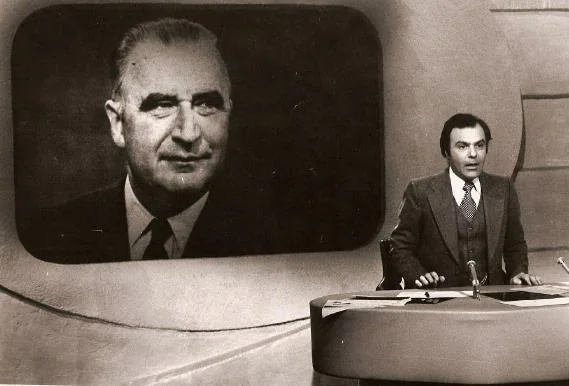
The death of Georges Pompidou
The president died on 2 April. On the 4th I anchored the evening news on the race to succeed him; on the 6th, the lunchtime edition for the ceremony at Notre-Dame. Then came the campaign: I was on air on 10 May, the night of the first televised debate between the two run-off candidates.
Chapter 4 : Every evening, in France's living rooms4 janv. 1975
Explaining the end of the ORTF to the nation
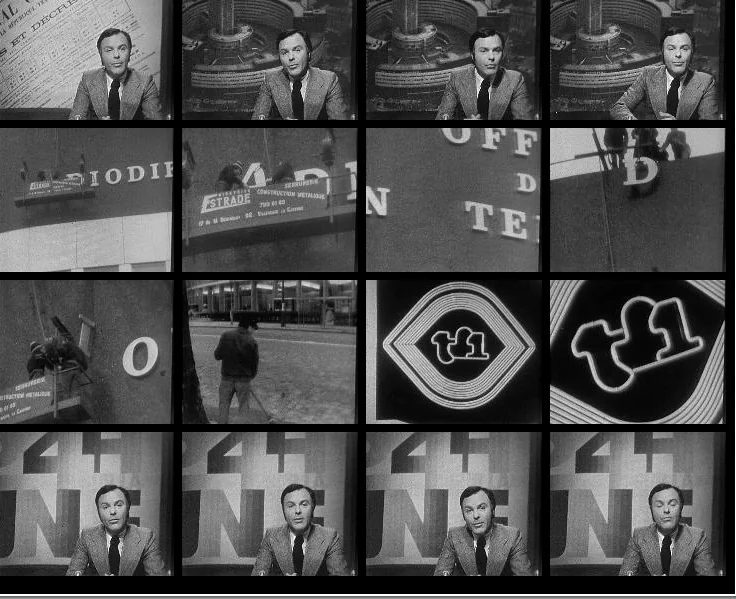
I anchored the lunchtime and evening news on the ORTF's second-to-last day. At lunchtime, over pictures of the sign being taken down from the Maison de la Radio, I explained how the corporation was being split into seven companies, and showed viewers a new logo: TF1.
Chapter 4 : Every evening, in France's living rooms6 janv. 1975
The birth of TF1: the late edition
TF1 went on air. Henri Marque, its head of news, had announced the line-up in Le Monde: three bulletins, three people in charge, Yves Mourousi at lunchtime, Roger Gicquel at eight, and myself at the end of the evening. From the very first night, at 10.30 pm, I anchored IT1's late edition: the day's news in brief for night owls.
Chapter 4 : Every evening, in France's living roomsJuil. 1976
On screen, playing myself
On 8 July TF1 broadcast the first episode of Claude Boissol's series "Nick Verlaine ou Comment voler la tour Eiffel", in which I play the television newsreader, in other words myself. In 1978 the cinema cast me as an interviewing journalist in Nicole de Buron's "Vas-y maman", starring Annie Girardot.
Chapter 4 : Every evening, in France's living roomsAoût 1976
Hollywood, a summer series for the evening news
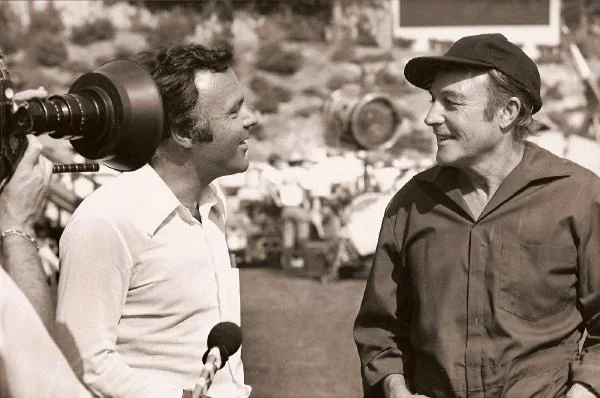
As head of arts and culture at TF1, I shot a series of reports in Hollywood for the eight o'clock news: Linda Blair, Gene Kelly on a film set with the stuntman Evel Knievel, Charlton Heston on "Midway". I also met Paul Newman, Sydney Pollack, John Frankenheimer and Ursula Andress there.
Chapter 4 : Every evening, in France's living rooms1977
Rome: TF1's permanent correspondent
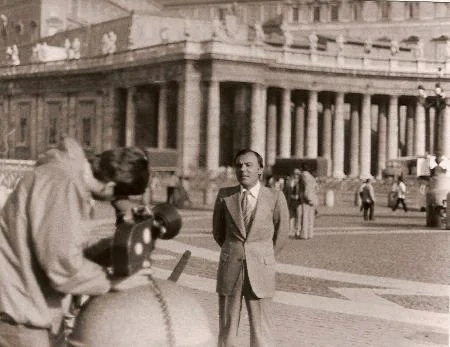
TF1 appointed me permanent correspondent in Rome and at the Vatican. I was to stay six years. The son of Italians, I nevertheless spoke not a word of the language my mother had banned from the house: I learned it on the spot. My earliest Roman archive dates from 10 April 1977: Easter Mass and Paul VI's blessing in St Peter's Square.
Chapter 5 : Rome, three popes and the Years of Lead16 mars 1978
The kidnapping of Aldo Moro
The Red Brigades kidnapped the president of the Christian Democrats in the middle of Rome. That same evening TF1's eight o'clock news ran the account I put together with Raymond Girard. On 3 May I interviewed Bettino Craxi, the Socialist leader, who was arguing for a humanitarian way out.
Chapter 5 : Rome, three popes and the Years of LeadAoût 1978
Paul VI dies, John Paul I is elected
Paul VI died on 6 August; on the 10th I explained the timetable and make-up of the conclave on the eight o'clock news. On the 26th, live from Rome with Bernard Chevallier, I commented on the first appearance of John Paul I, then described from St Peter's Square the afternoon's confusion: nobody could tell whether the smoke was black or white. The year of three popes had begun.
Chapter 5 : Rome, three popes and the Years of Lead16 oct. 1978
Habemus papam: John Paul II
White smoke. A Polish cardinal, Karol Wojtyla, became John Paul II, the first non-Italian pope in more than four centuries. In a live link from Rome with Roger Gicquel, I sketched for TF1's eight o'clock news the portrait of this pope from the East.
Chapter 5 : Rome, three popes and the Years of LeadOct. 1978
In the wake of John Paul II
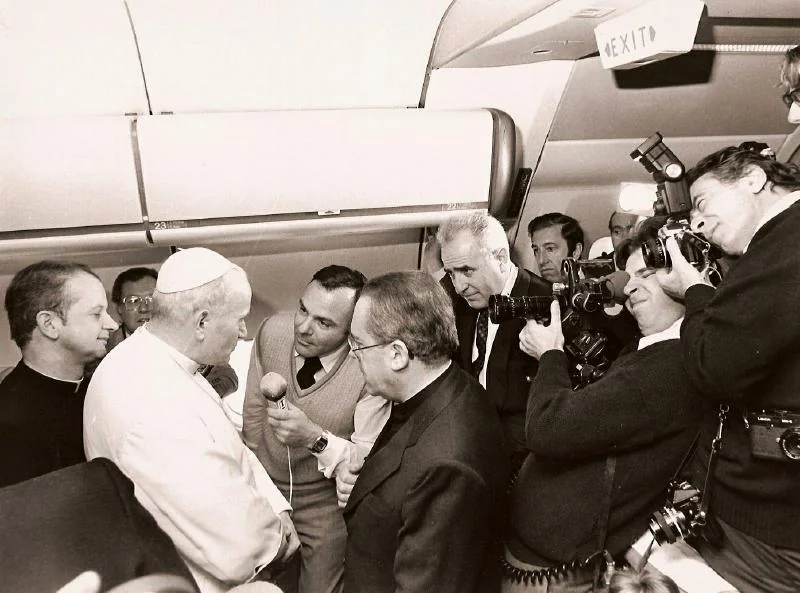
On 22 October I covered the inaugural Mass. On the 26th I followed Valéry Giscard d'Estaing's visit: an audience with the new pope, the taking up of his stall as canon of the Lateran, talks with Giulio Andreotti. Then the Polish pope began to travel like none of his predecessors, and I followed him on most of his journeys around the world.
Chapter 5 : Rome, three popes and the Years of Lead1980
Venice, Bologna, Naples: an Italian year
In February, the Venice carnival for Yves Mourousi's lunchtime news. In August, Bologna station, the day after the bombing that killed eighty-five people. In November, the earthquake that devastated the Naples region.
Chapter 5 : Rome, three popes and the Years of Lead14 mars 1981
"Les 20 canaux italiens": Italy's twenty channels
Straight to camera, in front of a television set, I hopped from one private Italian channel to the next to show French viewers a commercial television they did not yet know. It would reach France a few years later.
Chapter 5 : Rome, three popes and the Years of Lead13 mai 1981
The pope has been shot
In St Peter's Square, Mehmet Ali Agca shot John Paul II. That same evening I reported from Rome on TF1's eight o'clock news. Ten days later I published a long investigation in Le Figaro Magazine into the gunman's trail.
Chapter 5 : Rome, three popes and the Years of Lead1983
Back in Paris: special correspondent
After my Roman years, I was back in Paris as a special correspondent for TF1. I also returned to the studio: on 24 July 1983 I anchored the late-night news.
Chapter 6 : Special correspondent: a homecoming, two books, a farewell1984-1985
Two books with France-Empire
In 1984, "Ils ont réussi": thirteen long conversations about success, from Marguerite Yourcenar to Paul Bocuse, from Maurice Béjart to Michel Legrand. In 1985, "Vive la France quand même !": an essay on the French character and on France's image in the world, written on my return from Rome.
Chapter 6 : Special correspondent: a homecoming, two books, a farewell1987
Leaving TF1
TF1 was privatised. That autumn, like a quarter of the newsroom, I left the channel, after nearly twenty years on air, from the ORTF studios to St Peter's Square.
Chapter 6 : Special correspondent: a homecoming, two books, a farewell1er oct. 1988
Founding CBP Productions
After a spell as editor-in-chief of Sygma Télévision, I founded my own company, CBP Productions. Corporate films, video reports, prestige films: I produced and directed for Center Parcs, Lyonnaise des Eaux, the City of Paris, the Ministry of the Environment and Marithé et François Girbaud.
Chapter 7 : Producer, author, free man1989
A property magazine on Paris Première
On Paris Première I launched a weekly thirty-minute magazine, on Friday evenings, devoted entirely to property. Le Point described it at the time as the first television programme on the subject.
Chapter 7 : Producer, author, free man1994-2001
Documentaries at La Cinquième
When La Cinquième, the future France 5, was launched, I took charge of its discovery, arts and documentaries unit. Among the series I oversaw: "Teva", to which Le Monde devoted an article in November 1995, then "Aventures de femmes", portraits of women committed to work in the field.
Chapter 7 : Producer, author, free manNov. 2002
Les Conquistadors du système solaire
France 5 broadcast this 52-minute documentary on the robotic exploration of the planets, based on an original idea I developed with Claude Lemoine. Directed by Hervé Martin-Delpierre, with the astrophysicist André Brahic and the astronaut Jean-Pierre Haigneré.
Chapter 7 : Producer, author, free manJuin 2004
Ronald Reagan, la mémoire effacée
With Jeremy Marc I co-directed this 52-minute documentary for France 2, produced by Alain Delon and Cyril Viguier and screened in Paris in June 2004. In 2011 I devoted another 52-minute film to a former president of the United States: Jimmy Carter.
Chapter 7 : Producer, author, free man2005-2006
INBROV and "Le Barreau en Images"
On 1 September 2005 I set up International Broadcast Ventures (INBROV). Early in 2006 the head of the Paris Bar, Yves Repiquet, gave me a free hand: I launched a monthly online news programme for the Paris Bar, "Le Barreau en Images", which Le Figaro went on to cover twice, in 2007 and 2010. In November 2006 I also chaired the round tables of a conference on arbitration at the Maison du Barreau.
Chapter 7 : Producer, author, free man2007
Juror at the International Emmy Awards
I sat on the jury of the International Emmy Awards, which honour television made outside the United States.
Chapter 7 : Producer, author, free manJuil. 2013
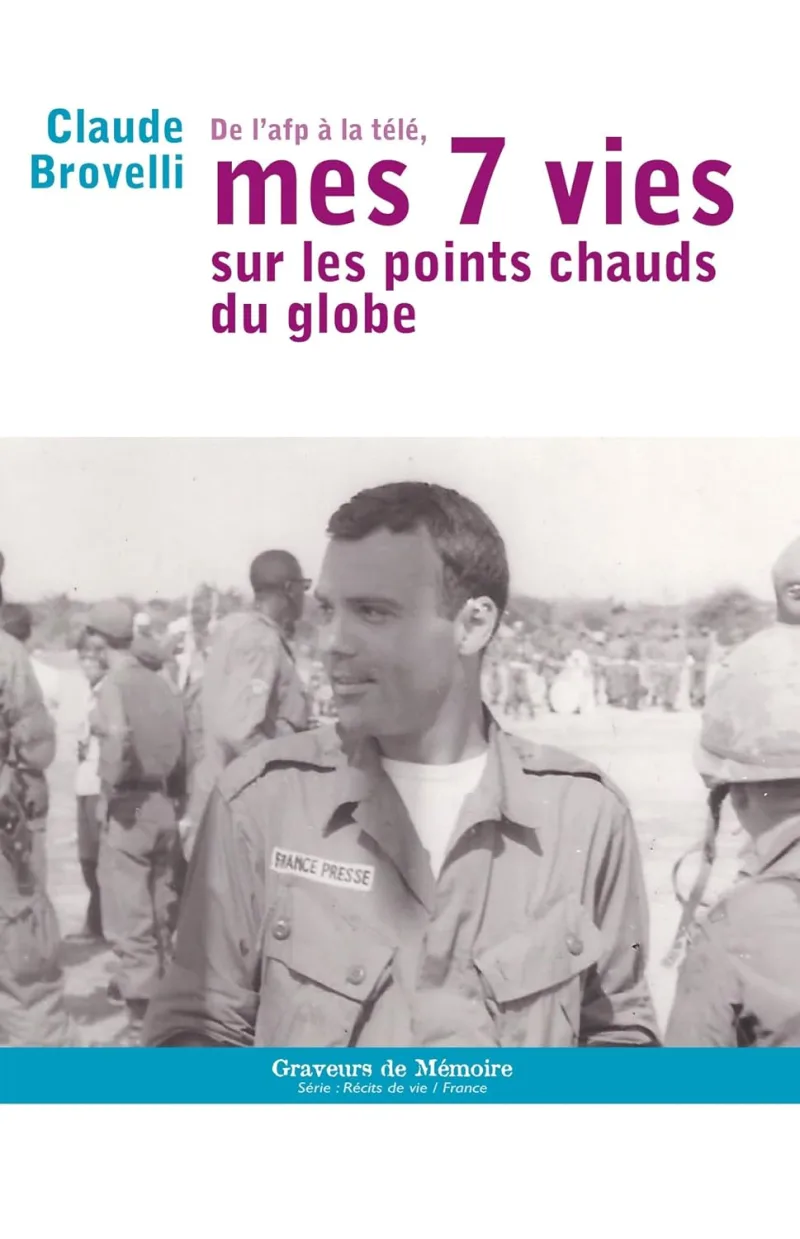
My memoirs: De l'AFP à la télé
L'Harmattan published, in its "Graveurs de mémoire" series, the story of my seven lives in the world's hot spots. It is the book that gave this website its structure.
Chapter 7 : Producer, author, free man13 déc. 2023
Ras le bol de fermer ma gueule
A columnist for Géostratégie Magazine since its first issue in February 2023, I published a polemic with Lafont Presse that December in which, after decades of professional restraint, I finally say what I think.
Chapter 7 : Producer, author, free man27 févr. 2026
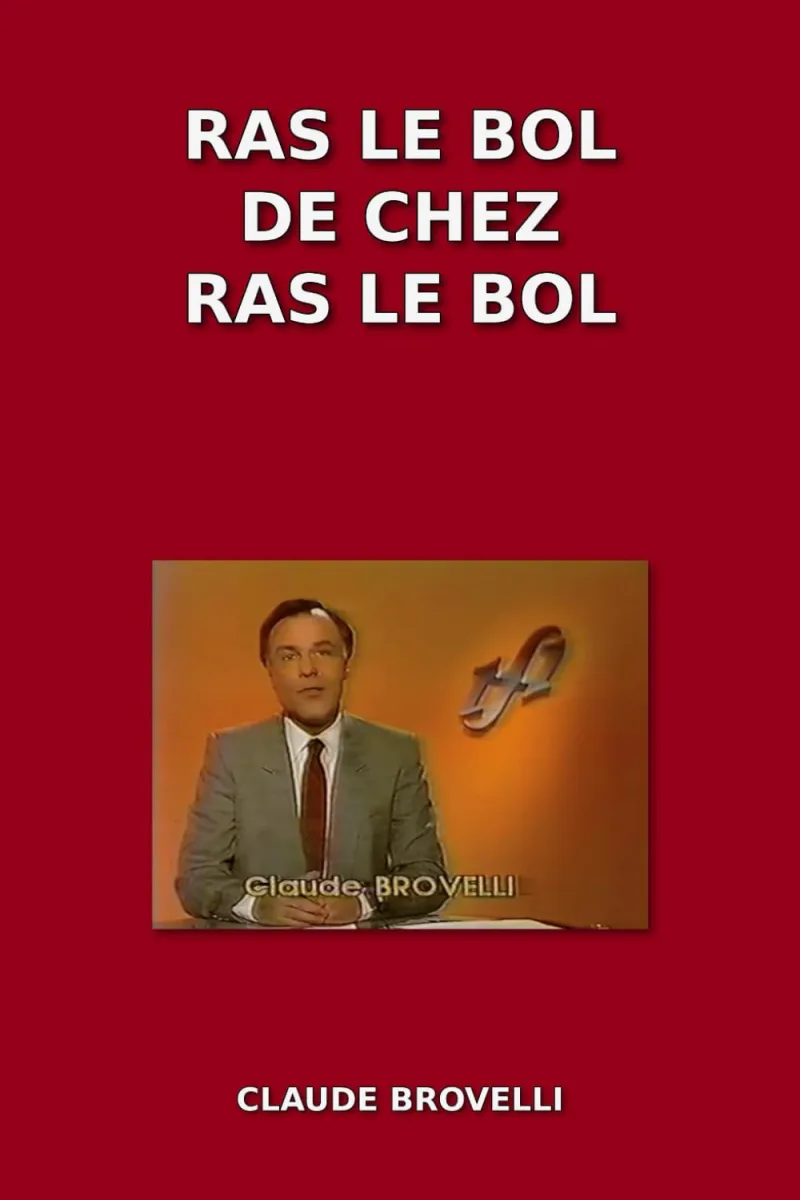
Ras le bol de chez ras le bol, my new book
I published independently the sequel to my 2023 broadside, with a new chapter on war, written by someone who saw it up close, from Vietnam to Biafra.
Chapter 7 : Producer, author, free man