Chapter 5. Rome, three popes and the Years of Lead
From 1977 to 1983 I was TF1's permanent correspondent in Rome. The son of Italian emigrants was returning to the country his father had fled, just as Italy was living through its Years of Lead and the Church was about to have three popes in seventy-one days. From the white smoke of 16 October 1978 to the gunshots of 13 May 1981, I told the French the story of those years.
Night has fallen over St Peter's Square when, shortly after six o'clock, the chimney of the Sistine Chapel begins to smoke. It is Monday 16 October 1978, and this time the smoke is white beyond all argument. Seven weeks earlier, at the election of John Paul I, smoke of no definite colour had thrown everyone into confusion, and I had described the muddle live from the square. Tonight nobody doubts. The crowd pours towards the basilica, a cardinal steps out on to the loggia and speaks the words the world is waiting for.
Habemus papam.
The name that follows means nothing to the square. Wojtyla. A Pole, Archbishop of Kraków, fifty-eight years old: the first non-Italian pope in more than four and a half centuries, from the far side of the Iron Curtain.
In Paris, Roger Gicquel opens TF1's eight o'clock news with the white smoke and the announcement. Then it falls to me to tell millions of French viewers who this stranger is: I recount the life of Karol Wojtyla on air, before Gicquel brings us in live from Rome, Bernard Chevallier and me, to work out what this election changes. He is the third pope I have had to talk about in seventy-one days. The fortune-teller who, in my teens in Nogent, had predicted that I would meet popes had not mentioned there would be three in a single year.
The country my father had fled
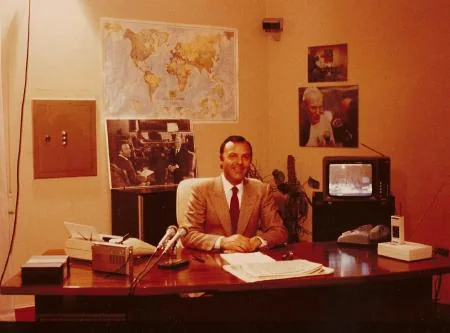
I had arrived the year before. In 1977 TF1 had appointed me its permanent correspondent in Italy; the bureau was on the Lungotevere Flaminio, beside the Tiber. No posting could have meant more to me. My parents came from a village near Lake Maggiore, with a single well in the courtyard. My father, hunted by the Fascist regime, had left Italy in the 1930s; a bricklayer's labourer, he had settled in Nogent-sur-Marne, where I was born. Forty years on, the exile's son was coming back to explain Italy to the French.
There was just one snag: I did not speak a word of Italian. At home my parents talked to each other in a Piedmontese dialect, and my mother forbade us Italian: we were to be French through and through. So I learned on the spot, and fast. My earliest Roman archive dates from 10 April 1977: Paul VI's Easter Mass and his urbi et orbi blessing, for the one o'clock news. I still have a picture of the old pope borne aloft on the sedia gestatoria. The death of Pius XII, in 1958, had been one of the two events that gave me a taste for this trade. Twenty years later the Vatican was about to give me a great deal more.
Fifty-five days
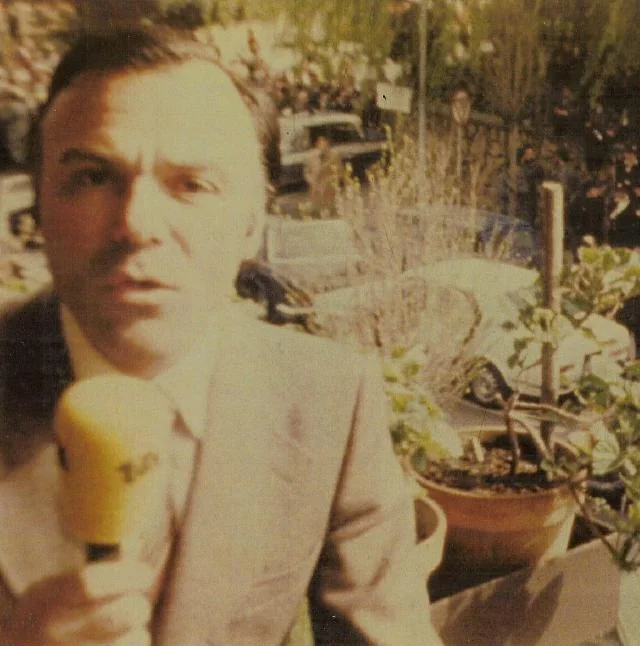
On 16 March 1978, in Via Fani in Rome, a Red Brigades commando kidnapped Aldo Moro, president of the Christian Democrats, and shot dead the five men of his escort. That same evening TF1's eight o'clock news ran a long report on the kidnapping and its political consequences, which I made with Raymond Girard. The pictures of Via Fani were shot by my cameraman, Cyril Sauvenière. Fifty-five days of waiting began: the kidnappers' communiqués, the prisoner's letters, a country torn between standing firm and negotiating. On 3 May I interviewed Bettino Craxi, the Socialist leader, who was looking for a humanitarian way out. Six days later Aldo Moro's body was found in the boot of a car in Via Caetani, in the heart of Rome.
I covered the Moro affair and the Red Brigades for TF1. No scoop, no feat to boast of: only a country in shock, where judges, policemen and journalists were being shot, and which had to be explained to the French.
Three popes in seventy-one days
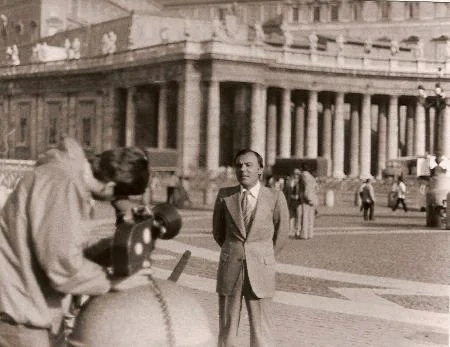
Summer brought no respite. On 6 August 1978 Paul VI died at Castel Gandolfo. On the 10th, from Rome, I set out for the eight o'clock news the timetable and make-up of the conclave, and the August heat that was hurrying the funeral along. On the 26th the cardinals elected the Patriarch of Venice, Albino Luciani, who became John Paul I: I commentated live, with Bernard Chevallier, on his first appearance, then returned in the late edition, from the square, to that smoke whose colour nobody had been able to call. Thirty-three days later the smiling pope was dead. Everything began again.
After 16 October the whole world was watching Rome. On the 22nd I reported for the one o'clock news on John Paul II's inauguration Mass, the Mass of "Be not afraid". On the 26th Valéry Giscard d'Estaing was in Rome: an audience with the new pope, the taking up of his stall as a canon of the Lateran, an old privilege of French heads of state, and talks with Giulio Andreotti. Paul VI, John Paul I, John Paul II: I approached and questioned all three popes of that year.
In John Paul II's wake
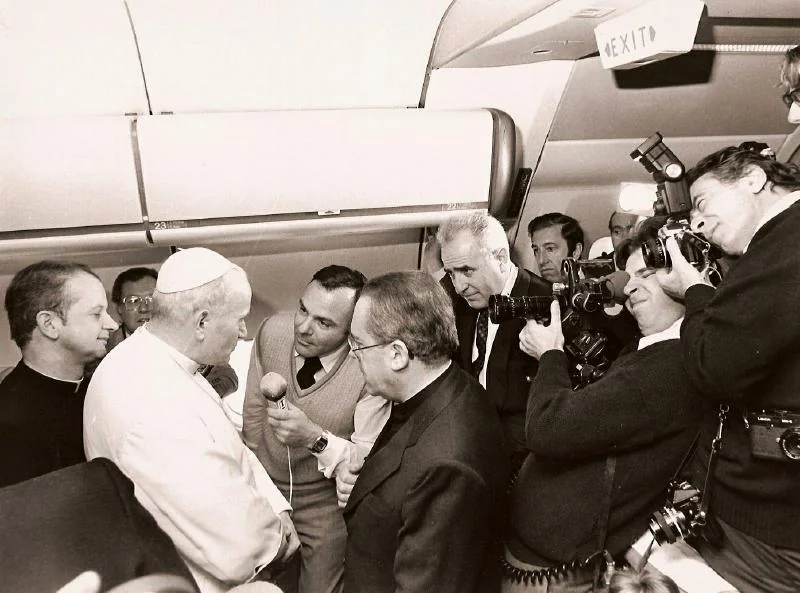
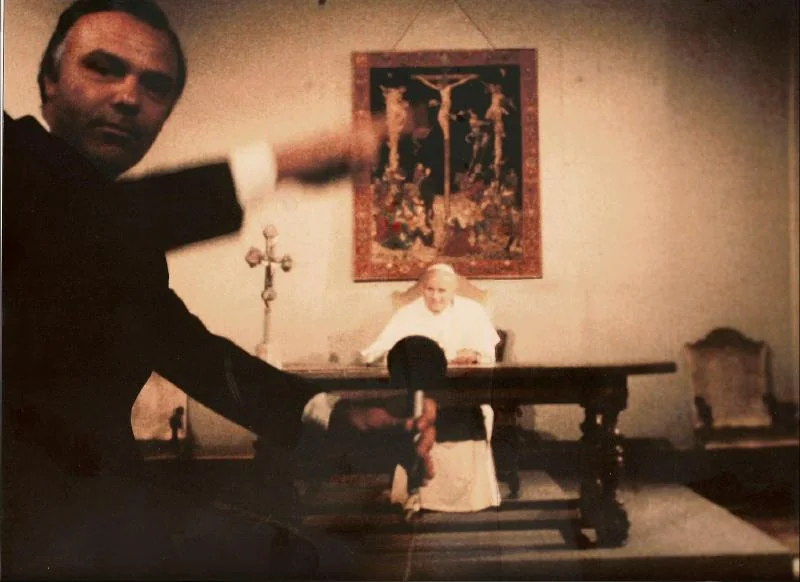
This pope would not keep still. Mexico, Poland, Ireland, the United States, Turkey, Africa, France, Brazil: his journeys led the television news, and I followed most of his travels around the world. My albums bear witness to it, right into the papal plane. In 1988 Paris Match would describe me as John Paul II's regular interviewer.
On Wednesday 13 May 1981, during the general audience in St Peter's Square, a young Turk, Mehmet Ali Agca, fired on the pope as he stood in his open car. John Paul II collapsed and was rushed to the Gemelli hospital. That evening, on the eight o'clock news, I gave the latest from Rome over the RAI's pictures. Ten days later I published a long investigation of the gunman in Le Figaro Magazine: his false passport, the boarding house he had stayed in near the Vatican, the theory of a plot, and what I had seen for myself, on the road, of how the pope was protected.
All of Italy
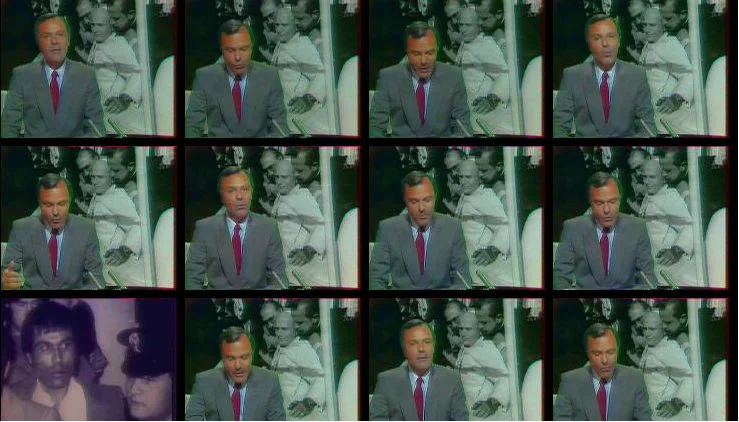
The Years of Lead came in more than one colour. On 2 August 1980 a bomb tore through Bologna railway station: eighty-five dead. The next day, in TF1's late edition, I went through the first leads with Sylvie Hay. The Italian courts would convict neo-fascist militants: back in 1971 my investigation for the ORTF had already shown, behind Giorgio Almirante's party, more radical groups. In November the earth shook in the Naples region, and I covered that disaster too.
Yet Italy had another face, that of its president. Sandro Pertini, an old Socialist and former Resistance fighter, had known Fascist prisons and exile in France, where he had worked as a bricklayer in Nice. A building worker, like my father. I devoted a programme to him for French television, which an Italian book about him cites. In February 1980, for Yves Mourousi's one o'clock news, I told the story of the rebirth of the Venice Carnival: six days of festivities, costumed processions and gondolas. And on 14 March 1981, in front of a television set, remote control in hand, I hopped from one private channel to the next to show the French, who had only three public channels, what was brewing on the other side of the Alps: some twenty channels, and the beginnings of Silvio Berlusconi's television stations.
Arrivederci, Roma
When those Roman years ended, I went home to Paris. I had learned a language, covered the deaths of two popes, seen a third recover from an assassination attempt, and told the story of a country that held firm through the Red Brigades, the bombs and the P2 lodge scandal. I became a special correspondent once more. And having looked at Italy for so long, I was about to look at France through the eyes of someone who had long seen it from afar.