Chapter 1. The boy from Nogent
A fortune-teller in Nogent-sur-Marne had promised me a journey round the world, presidents, kings and popes. At the time there were seven of us living in two rooms, and I was about to leave school with nothing but a primary certificate. This is how the son of an Italian labourer came to join Agence France-Presse.
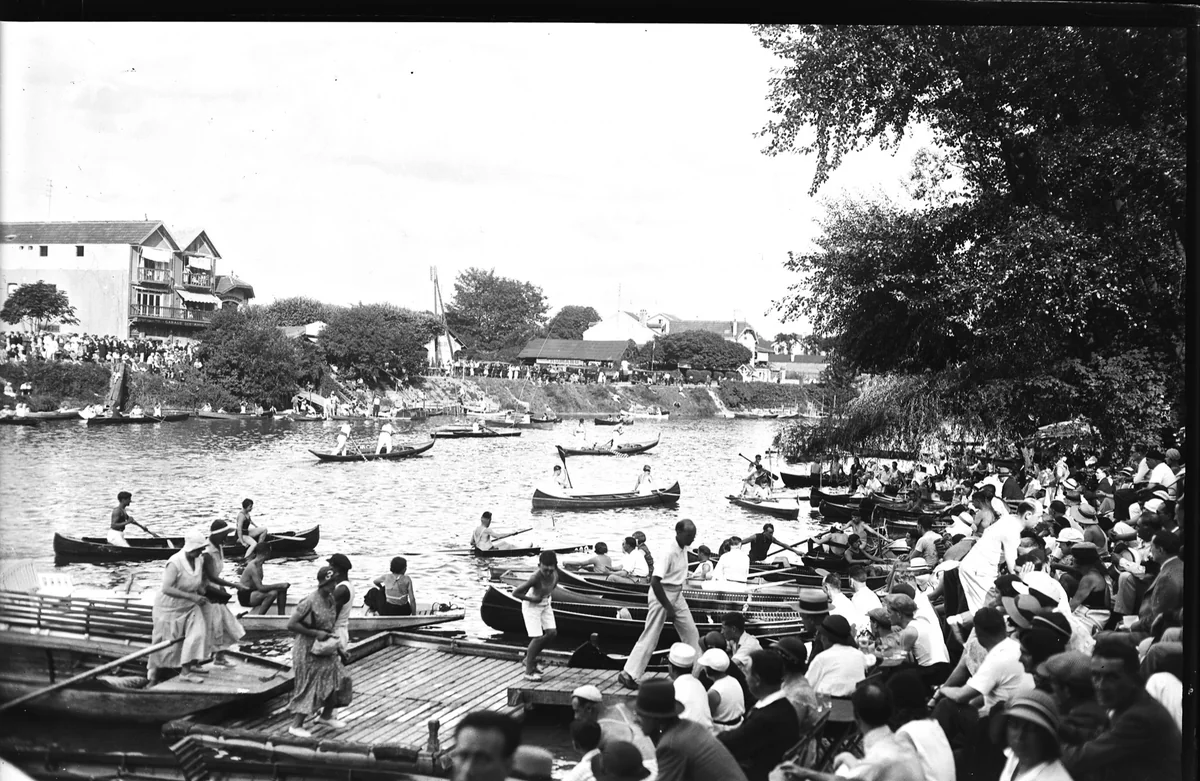
A fortune-teller had told me all of it in advance. It was in Nogent-sur-Marne, on the Grande Rue, and I was still in my teens. She predicted that I would travel round the world, that I would meet presidents, kings and popes, that I would write books and that people would know my name. It took some imagination to believe her. At home, seven of us lived in two rooms.
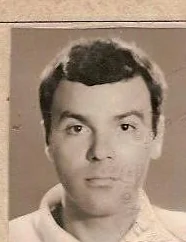
Seven in two rooms
My parents had arrived from Italy not long before I was born. They came from the Lake Maggiore region and they had fled fascism: my father was being hunted by the regime. Between themselves they spoke a Piedmontese dialect, and very little Italian. Every morning my father went out looking for a day's hire as a bricklayer's labourer. My mother took in other people's children in our tiny lodgings. We slept in an attic room of some fifteen square metres, a curtain drawn between my sisters and me, and the lavatory was at the bottom of the garden.
Nogent, the town of riverside dance halls and cheap white wine, was also the town of the Ritals, the Little Italy of bricklayers that the writer François Cavanna made famous. My mother, for her part, had laid down the law: no Italian at home. We were going to be French, completely. She succeeded so well that much later, when TF1 thought of posting me to Rome, it emerged that the son of Italians did not speak a word of Italian. I went anyway, and learned it very fast.
Of the war, the small boy I then was kept a few pictures: the explosions at the Nogent viaduct, the GIs throwing us chocolate and chewing gum, which we swallowed for want of knowing what else to do with it. There was also Mademoiselle Mathieu, a social worker and a friend of my mother's, who let me spend whole afternoons playing with her old typewriter. Being able to type was to serve me three times: in the army, at the agency, and throughout my career.
A primary certificate, then the factory
I left school with a single qualification, the certificat d'études primaires. I was a trainee in a bank, a stockroom boy for a cloth wholesaler in the rue du Grenier-Saint-Lazare, then a night-shift worker in a plastics factory in Bobigny. My pleasures: the moped, the Teppaz record player, the first 45s, the pictures on Sundays in Nogent or Le Perreux.
Stockholm, love at first sight
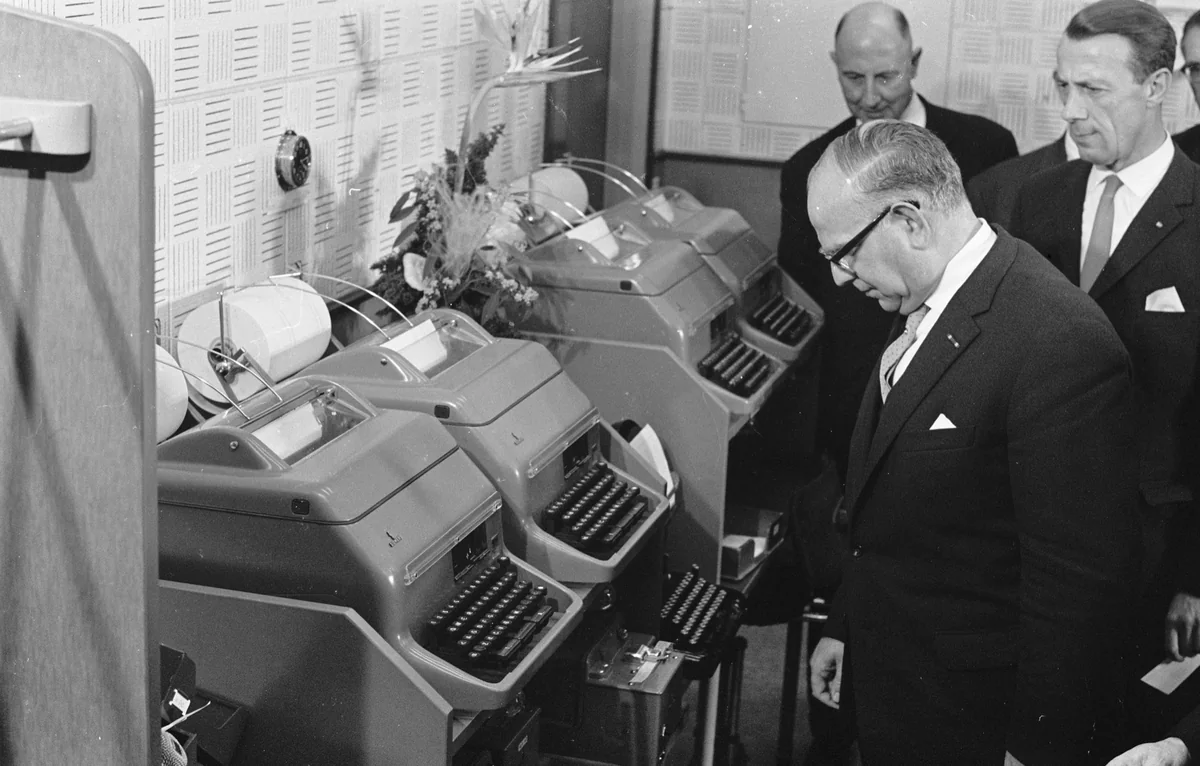
It was Sweden that changed everything. After the war one of my sisters, Janine, had been taken in there by the Red Cross; another, Sylvia, had settled there. One day I fled the factory and joined her in Stockholm. There I met the Agence France-Presse correspondent, followed him to his office, and stood transfixed in front of the teleprinters, those machines that typed out the world's news all by themselves. My mind was made up on the spot: I would be a journalist, and at AFP. I minded his machines as a volunteer, and spent two years as errand boy at the Belgian embassy. The ambassador, Baron Marcel-Henri Jaspar, would later recommend me to Jean Marin, the head of AFP.
Algeria, a transistor to my ear
I had given up my deferment hoping for Germany: after basic training in the citadel at Lille, in 1959 I was boarding the Pasteur for Oran. Because I could type, I was assigned to the 5th Bureau, psychological action: at the wheel of a van whose loudspeakers broadcast General de Gaulle's speeches translated into Arabic, I handed out rice in the villages. In April 1961, during the generals' putsch, with a transistor radio pressed to my ear and loyal to de Gaulle, I carried part of the regimental staff with me, starting with my superior, Lieutenant Michel Duchaussoy, a future sociétaire of the Comédie-Française. I slept with my 9mm under the pillow.
13, place de la Bourse
On 30 September 1961 a letter arrived: Agence France-Presse, 13 place de la Bourse, was taking me on as an editorial assistant. For one month. I discovered the great newsroom, the manual typewriters, the pneumatic tubes, the six-hour shifts, and the house rule against AP, UPI and Reuters: speed and accuracy. Jean Marin, one of the voices of Free France in London, summoned me and gave me three months to prove myself. His criteria: write without mistakes, know how to type, have a decent grasp of English.
I became a trainee on 8 December 1961 and a staff journalist in February 1962, on the foreign desk and then on the overseas desk, at night. First salary: 572 francs a month, and a tricolour press card of which I was very proud. Jean Marin's lieutenants trained me down to the last comma: Claude Imbert, who would go on to found Le Point, Jacques Boetsch, Jean-Jacques Faust. The best school of journalism of my day was that one. Two events had fed my vocation: the fall of Dien Bien Phu in 1954, the death of Pius XII in 1958. One day I would cover Vietnam, and three popes.
In the summer of 1962 the head of personnel offered me Dakar: a colleague had just turned the posting down for family reasons. My transfer letter is dated 27 August 1962. Eleven months after coming in by the back door, I was leaving as a correspondent in Africa. The fortune-teller of the Grande Rue was beginning to be proved right. One detail remained to be settled: I was afraid of flying.