Chapter 2. A wire reporter in newly independent Africa
In 1962 Agence France-Presse posted me to Dakar. Senegal and Mali had been independent for two years, and a whole continent was learning to govern itself. I was learning my trade, to the rhythm of the telex, across a dozen countries.
Bordeaux, autumn 1962. I boarded the Ancerville with an army trunk bought on the boulevard de Sébastopol and a grey Peugeot 203 with a sunroof, bought second-hand and on credit. Agence France-Presse had just posted me to Dakar, and I had obtained permission to go by sea for a none too glorious reason: I was afraid of flying. An odd start for a future foreign correspondent. But as the ship headed south towards Africa, a single sentence did duty for all my thoughts.
The world was mine.
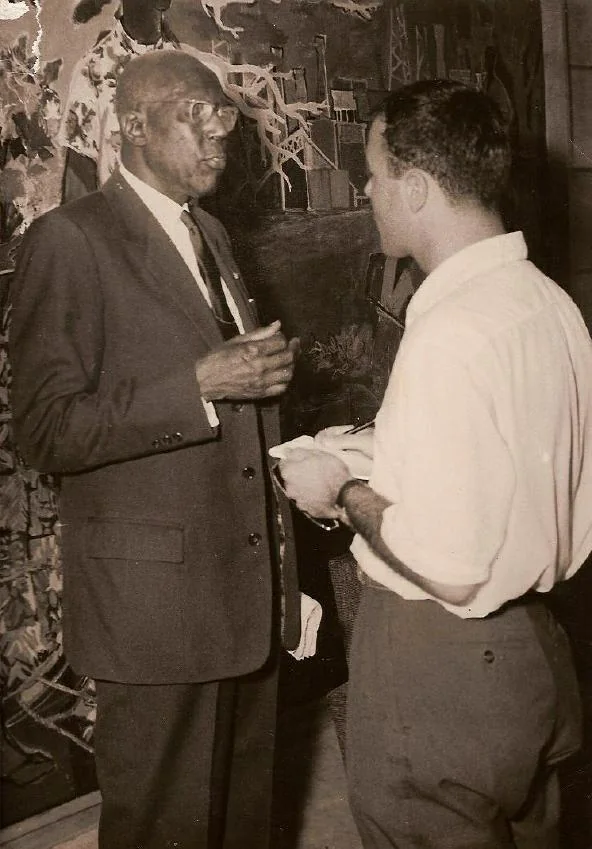
A photograph survives from my early days in Dakar, and it is the very first of my life as a journalist. It shows me with Lamine Guèye, President of Senegal's National Assembly. It was also my first interview. A beginner could have done far worse: Lamine Guèye was then the elder statesman of Senegalese politics, a lawyer, a former member of the French parliament, the man who gave his name to the 1946 law that made every inhabitant of France's overseas territories a French citizen. He had decades of political battles behind him. I had barely a year at the agency.
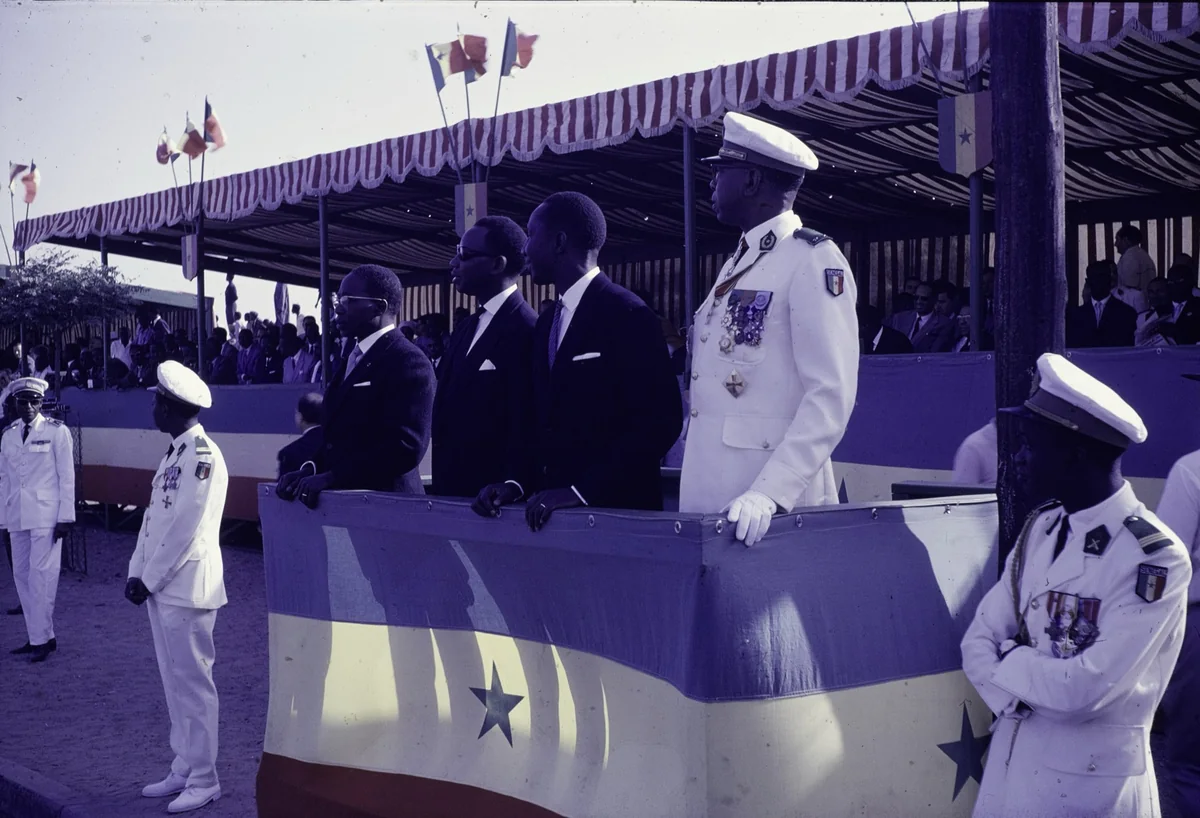
Dakar, capital of a brand-new world
The country I landed in was two years old, and AFP's regional bureau was three people strong. Only yesterday Dakar had been the capital of French West Africa; now it was the capital of a sovereign republic, born in 1960 from the break-up of the short-lived Mali Federation. Everywhere new flags were being raised, stamps printed, embassies opened. For a young journalist it was a dream posting: history was being made in front of you, and it needed someone to tell it quickly.
A poet sat in the presidential palace. Léopold Sédar Senghor, a grammarian by training and the great voice of négritude, would one day be elected to the Académie française. I interviewed him, and I say it without hesitation: he remains one of the most intelligent men I have ever had the chance to question.
The telex, the dispatch, the clock
In the field, the rule I had learned at the place de la Bourse came into its own: speed and accuracy. A dispatch opens with a place, a date and three letters, then gives the essentials in the very first sentence: who, what, where, when. The rest follows in descending order of importance, so that any newspaper in the world can cut from the bottom and lose nothing. No adjectives, no opinions, no approximations. One misspelt name, one wrong figure, and it is the whole agency that is wrong, the next morning, in hundreds of newspapers.
And you have to be first, because the British and American competition have their own man on the spot. Everything goes by telex, that big, noisy keyboard which punches a paper tape and sends it off to Paris, when the line is willing to hold. No mobile phone, no Internet: a telex, a plane ticket, and the duty to go and see for yourself. An agency correspondent works without a net and without glory. His dispatches almost never carry his name. Yet they are what the radio stations read out on air and what the newspapers print.
A dozen countries for a beat
From Dakar my beat widened. There was Bamako, on the Niger, where Modibo Keïta was steering Mali down a socialist road and took it out of the franc zone as early as 1962. Then, over the years, a dozen countries: Guinea, Ivory Coast, Upper Volta, Togo, Niger, Dahomey, Mauritania, the two Congos, all the way to South Africa. Several have changed their names since. All of them were then busy inventing themselves, with their immense hopes, their strongmen and their first disappointments. The young man who was afraid of flying simply had to get used to it.
When history walks past your notebook
The Africa of those years was no backwater. It was a crossroads. Washington, Moscow, Peking and Havana were all courting the young states, and the great figures of the Third World crossed paths there. An agency correspondent in the right place sees history walk past within reach of his notebook. Three of my encounters date from those agency years: Ahmed Ben Bella, first president of independent Algeria; Zhou Enlai, premier of Mao's China; and Ernesto Che Guevara. My publisher would list them in 1969 on the jacket of my first book. I approached them and questioned them as a wire man does: to report their words, not mine.
In 1965 the agency gave me another posting. Further away, and harder. Out there the Americans still had, officially, nothing but "advisers". The city was called Saigon. Africa had taught me to write fast and to get it right. I still had to learn to do it in the middle of a war.