Chapter 3. War correspondent, from Saigon to Biafra
Nearly three years in Saigon as America escalated its war, then the summer of 1968 on the Nigerian front with the federal troops, all the way to the headquarters of the "Black Scorpion". My dispatches ran in Paris, London and Rio. From that war I also brought back my first book.
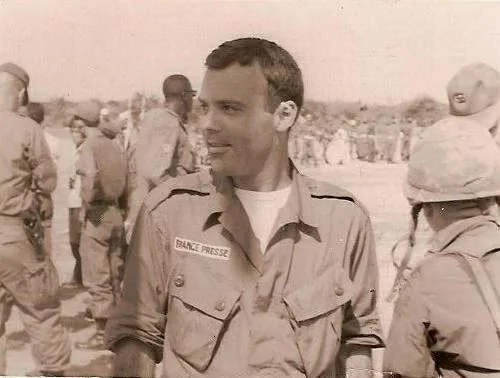
The bridge has been blown, and the road stops here. Further on, the Biafrans ploughed up the tarmac with a bulldozer before pulling back. From Port Harcourt we have driven between the carcasses of cars and villages wiped off the map: Isoba, Aloa, Igrita, Agwa. Around us, silence. The river has to be waded, waist-deep. After that there are eight kilometres left to the front. We shall cover them on foot.
It is late July 1968, at Nsokpo, thirty-five kilometres north-west of Port Harcourt. I spend three days with the Nigerian federal troops, among the first journalists to reach this sector. Mortars and 105mm guns fire towards lines no one can see. My dispatch, datelined Nsokpo, 29 July, appears in Le Monde dated the 30th, presented as an eyewitness account. To understand how I came to be on that road, we have to go back to Saigon.
Saigon, 1965
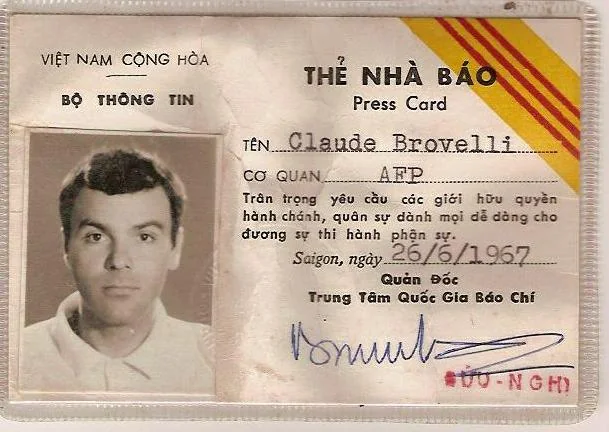
I arrived in 1965, sent by AFP. Eleven years after Dien Bien Phu, here I was in the next war. Officially, the Americans still had nothing in Vietnam but "advisers". By the time I left, in 1968, there were more than half a million soldiers. Between those two figures I lived through the escalation day by day. It was in Saigon that I formed a conviction that never left me: the Americans were not going to win this war.
I was the agency's correspondent; I was also the ORTF's man in Saigon, and Europe 1's. I have kept from those years my accreditation card from MACV, the American military command, whose daily press briefing, nicknamed the "Five O'Clock Follies" by the correspondents, bore so little resemblance to what one saw in the field. You had to go and see for yourself.
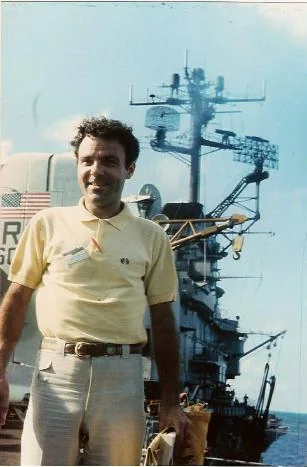
A party at "Brovelli, de l'A.F.P."
During the winter of 1966-1967 a young French journalist, Michèle Ray, was travelling across South Vietnam. On 17 January 1967 she was captured by the Viet Cong, who released her a few weeks later. Paris Match then published her letters from Vietnam. In one of them she says she is heading back to Saigon for a party thrown in her honour, on her birthday, at the home of "Brovelli, de l'A.F.P.". My dispatches went out unsigned: it was through a party that my name entered the archives.
My meeting with Richard Nixon dates from those years too; he was not yet president, and he came through Saigon more than once. From Vietnam I brought back a line I am fond of repeating: in my generation there are two kinds of journalist, those who went to Vietnam, and the rest. Early in 1969 Jeune Afrique would still publish my report on an anxious Saigon, opposite Marc Riboud's photographs of Hanoi.
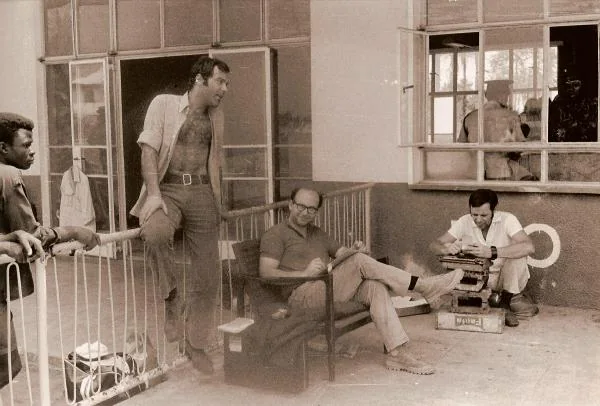
May 1968: one full stop too many
In the spring of 1968, after nearly three years of Vietnam, I was back in Paris on the agency's foreign desk. While the capital burned, the Prime Minister, Georges Pompidou, was on a visit to Afghanistan. I gave a dispatch the headline "Pompidou fait du tourisme en Afghanistan." (Pompidou goes sightseeing in Afghanistan.) The electric machine doubled my final full stop, and the headline went out trailing dots that looked exactly like a comment. The Prime Minister's office rang, furious. One of the chief editors pleaded that an ellipsis takes three dots, and I was acquitted with the benefit of the doubt. The irony is that I admired Pompidou. But my decision to leave the agency gradually dates from that incident.
At the headquarters of the "Black Scorpion"
In July 1968 AFP sent me to Nigeria. The Biafran war had been going on for a year, and a shaken Europe was discovering the pictures of starving children. I covered it from the federal side, out of Lagos and Port Harcourt, with the 3rd Marine Commando Division. That was the unit I followed to Nsokpo, and its commander received me on 30 July in Port Harcourt: Colonel Benjamin Adekunle, known to his men and his enemies alike as the "Black Scorpion".
As far as he was concerned, he told me, the war was over: he awaited only the order, and promised to take Owerri, Aba and Umuahia within two weeks. He tore into the Red Cross, which he wanted out of his sector. He called himself an admirer of General de Gaulle but was unhappy with France's position, and complained of planeloads of arms landing in Biafra by night. Le Monde ran the interview in its edition dated 31 July, the very day the French government made public its declaration on Biafra. The next day a telegram from the US State Department to its embassies in Lagos and Paris summarised and commented on my dispatch. A wire dispatch that lands at the right moment gets read all the way up to the chancelleries.
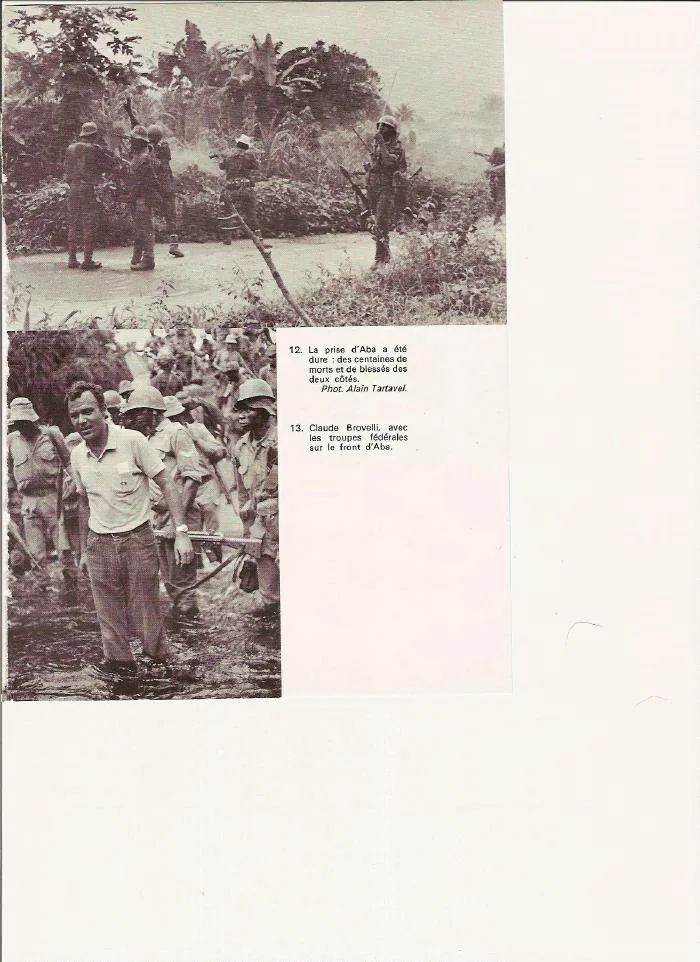
In early August, from a Lagos drowning in rain, I wrote for the Jornal do Brasil that the colonel's two weeks struck me as decidedly optimistic. The war would last until January 1970. On 27 August The Times of London carried my dispatch, co-signed with Colin Haynes: General Gowon had given the order for the final offensive. On 4 September I was among the first reporters to enter Aba, which had just fallen. Overturned cars by the thousand, mortars at every crossroads against snipers, columns of refugees, and a town carved up into sectors named Love, Hate, Heaven and Hell. My dispatch, datelined "Aba, Biafra (AFP)", was printed as far away as Canada's Pacific coast.
La Guerre des rapaces
I spent two months on that front. On my return I turned it into a book with the Belgian journalist Jean Wolf: La Guerre des rapaces, published by Albin Michel in 1969 while the war was still on. I brought to it what I had seen, and several of my own photographs.
I was on the federal side, and I do not claim to have seen everything. But what I had seen did not fit the black-and-white story that then prevailed in France. The book refuses to simplify: it describes the violence on both sides, follows the trail of oil and of the great powers, those "vultures" circling above a bleeding country, and devotes a chapter to the work of the Red Cross. The critics saw it as the first French book written from the federal side. Le Monde reviewed it in May 1969, the British journal International Affairs in January 1970, alongside Frederick Forsyth's book. Much later a fellow journalist, Jean-Pierre Van Geirt, would write that one of my Biafra dispatches had shaken the young reporter he then was. And historians of that war still cite the book.
1969 was also the year I left AFP. Eight years at the agency, some twenty countries, two wars. I went by way of France Inter: on 8 May, on the eight o'clock news, I commented on the new peace plan at the Paris conference on Vietnam. Then, in the autumn, Jacqueline Baudrier called me to the ORTF's second channel to present the eight o'clock news. For eight years I had written with no byline and no face. I was about to have one, every evening, in the living rooms of France.